


Positive Reinforcement in Education: How Praise Helps Students Learn, Grow, and Succeed
Jul 24, 2026 Admin
All children are different and have specific strengths, skills and potential. It has been noticed that academic scores are sometimes the most talked about, but education goes beyond that! It involves confidence, curiosity, emotional health, resilience and a love of learning throughout one's life.
Today's competitive world often puts academic pressure, performance anxiety and fear of failure on students. Hence, it is more crucial than ever to create a conducive learning environment.
Positive reinforcement in education is one of the most successful strategies employed by teachers and parents all over the world. Moreover, students become confident, motivated due to positive reinforcement. They are generally keen to learn with encouragement, appreciation and meaningful recognition.
What Is Positive Reinforcement in Education?
Positive reinforcement in education is a method of teaching and parenting that encourages positive behaviour among the students. It is done by recognising efforts of the kids or learners, improvement, achievement and positive actions. Positive reinforcement is used to encourage students, rather than just focus on their errors and mistakes.
Examples:
- Praising effort
- Recognizing improvement
- Encouraging participation
- Celebrating achievements
- Providing constructive feedback
A supportive school environment plays a vital role in helping children grow into confident learners. Learn more about the Holistic Development at DPS MIHAN.
Why Is Positive Reinforcement Important for Students?
It is seen that students generally do well when they are recognised for.
Students will benefit from positive reinforcement because they will:
- Develop self-confidence
- Improve motivation
- Build emotional resilience
- Increase classroom participation
- Limit the negative effects of failure
- Build a growth-oriented thinking approach.
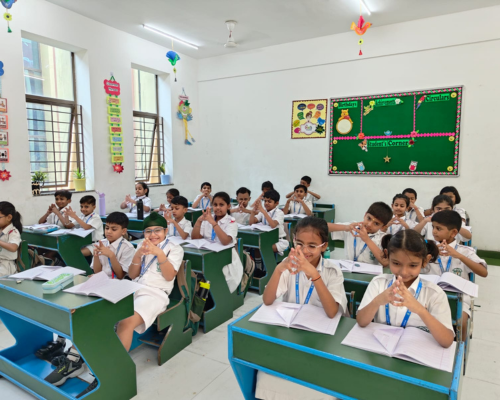
Positive reinforcement in education also plays an important role in supporting children's emotional well-being. Learn more about Normalising Mental Health at DPS MIHAN.
What Research Says About Positive Reinforcement
There are multiple educational research studies that back up the use of positive reinforcement.
Educational Psychology studies reveal:
- Students who are responding positively to feedback tend to be more engaged in the classroom.
- Encouragement contributes to good emotional health.
- Student motivation is enhanced by recognition.
- Appreciation based on efforts promotes a growth mindset.
Research Findings
| Research Finding | Benefit |
|---|---|
| Positive feedback | Higher motivation |
| Recognition | Improved confidence |
| Effort-based praise | Growth mindset |
| Encouragement | Reduced anxiety |
| Appreciation | Better participation |
These results emphasise the role of encouragement in the classroom and at home.
Benefits of Positive Reinforcement in Education
1. Builds Self-Confidence
Students who are given appreciation start to have faith in their capabilities and feel they can develop.
2. Enhances Motivation
Students are encouraged to keep working hard when they are recognised.
3. Improves Academic Performance
Engaged students are more likely to be motivated to do better. In academics and other fields
4. Encourages Positive Behaviour
Children are more likely to repeat behaviours that are appreciated or praised for performance.
5. Supports Emotional Health
Positive reinforcement decreases stress and makes students emotionally safe.

At DPS MIHAN, our New-Age Teaching Methodologies encourage curiosity, confidence, and active participation."
How Parents Can Motivate Children Without Pressure?
Many parents feel concerned about motivating children without incurring stress. These are a few tips that will help you:
Focus on Effort
Rather than: “You only got 80 marks.”
Say: ? “I saw how well you studied for your test.”
Avoid Comparisons
All children have different learning styles. Comparing children reduces the confidence of the children.
Celebrate Progress
Celebrate successes, no matter how small.
Encourage Independence
Allow children to make decisions about their learning.
Set Realistic Goals
Children are successful regularly through achieving small goals.
Here are some examples of how to use Positive Reinforcement at home.
| Situation | Traditional Response | Positive Reinforcement |
|---|---|---|
| Low marks | “Why did you score less?” | “Let’s understand where you struggled.” |
| Homework | “Finish it quickly.” | “I appreciate your effort.” |
| Mistakes | “You always make errors.” | “Mistakes help us learn.” |
| Improvement | No response | “You have improved a lot.” |
Children feel confident when they are given positive reinforcement in the form of little words.
Positive Reinforcement Strategies for Teachers
Educators are key to motivation among the students.
strategies to consider for classroom:
- Specific praise
- Recognition boards
- Written appreciation notes
- Celebrating improvement
- Leadership opportunities
- Encouraging participation
Examples:
- “You have become a better presenter.”
- “You did a very good job.”
- “You have some good ideas.”
Such feedback contributes to a positive classroom culture.
How Positive Reinforcement Builds a Growth Mindset
Students who receive effort-based appreciation learn that:
- Success requires hard work.
- Mistakes provide opportunities to learn.
- Challenges help to grow
- Improvement is always possible.
This attitude helps students to succeed in school and in life.
Connection between Positive Reinforcement and Academic Performance
Positive reinforcement helps:
- Increase concentration
- Improve participation
- Build confidence
- Reduce examination stress
- Encourage consistent effort
If pupils are enjoying learning then success is likely to follow.
Looking for a school that nurtures confidence, character, and academic excellence? Explore why DPS MIHAN is regarded as one of the Best CBSE Schools in Nagpur
Take the first step towards your child's success today!
Email:info@dpsmihan.com
Call:+91 96078 55441
Admissions Open from Pre-Nursery Onwards – Enquire Today!
Why Positive Reinforcement Matters in Modern Education
Student success in modern education is more than just about academic achievement.
Students today need:
- Communication skills
- Critical thinking
- Emotional intelligence
- Confidence
- Adaptability
- Leadership skills
These are the skills that can be developed with positive reinforcement and that are needed for the future.
Artificial Intelligence is transforming Indian classrooms by making learning more interactive, personalized, and future-ready.
At DPS MIHAN, we embrace innovative teaching methods that prepare students with the skills needed for tomorrow.
Discover how Artificial Intelligence is transforming Indian Classrooms
Creating a Positive Learning Environment at DPS MIHAN
Students will be academically and personally successful in a supportive learning environment.
DPS MIHAN puts special emphasis on:
- Holistic development
- Student well-being
- Confidence building
- Leadership opportunities
- Participation and engagement
- Encouraging individual potential

This way, students will develop into responsible and confident.
Key Takeaways for Parents and Teachers
- Value effort, not just results.
- Do not make comparisons between children.
- Celebrate improvement.
- Encourage curiosity.
- Appreciate to build confidence.
- Create a safe learning environment
Positive reinforcement is not about enthusiastic praise. It's about teaching children that hard work and perseverance are important.
Positive reinforcement is most effective when combined with a supportive learning environment. At DPS MIHAN, our focus on holistic development empowers students to grow with confidence, resilience, and a love for learning.
Explore why parents choose DPS MIHAN for their child's future.
Final Thought
One of the strongest resources at parents' and teachers' disposal is positive reinforcement. Very positive comments can motivate students to step out of their comfort zone. It would encourage confidence and realise their abilities.
Valuing the contribution of the students and caring for the progress of children would strengthen the confidence. Supporting the students while studying would not only help them to achieve good academic results but would also help to be resilient and lifelong learners.
Discover how our Holistic Learning Approach and commitment to lifelong learning help students become confident and responsible individuals.
Frequently Asked Questions
What is positive reinforcement in education?
Positive reinforcement is a technique that involves acknowledgement of efforts. It involves progress and achievement made to encourage positive behaviour.
Can appreciation improve the confidence of a child?
Yes, confidence and self play an important role in the life of children, especially when they are learning something. Appreciating a student would create a positive impact in their mind. Hence it would help building the confidence
What are examples of positive reinforcement in schools?
Positive reinforcement includes praise, recognition, certificates, feedback, and appreciation.
How to motivate children without pressuring them?
Parents can concentrate on efforts that are being made by their children. Apart from this, they can praise the progress of their ward. Even they can refrain from comparing and provide a positive learning environment.
Does positive reinforcement improve academic performance?
Yes. When the students are encouraged, they tend to be more actively involved. The results of this engagement can be seen in their learning.